The platform is here. The killer app isn't.
Smart glasses went mainstream in 2026 — Meta is selling them by the millions and Apple is entering the category. But the world-shaking app, the one everyone puts on first, hasn't shipped. That is exactly the moment new platforms mint their defining apps: the phone camera had no reason to exist until Instagram and Snapchat gave it one.
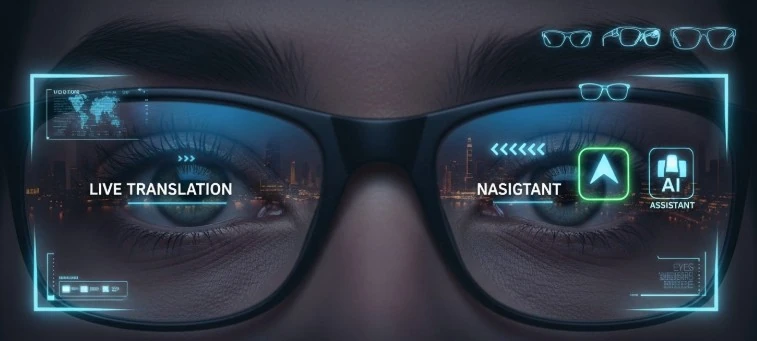
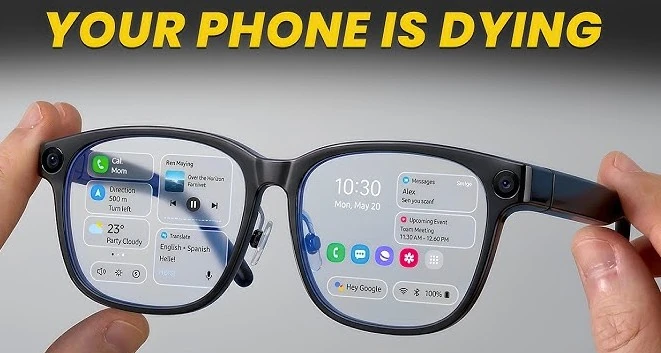
AURA is a serious attempt at that app: an always-on AI that sees and hears what you experience and hands you real-time superpowers. It is built as a heads-up display you can install on your phone right now, and it is designed to transfer, one to one, to glasses.
Three superpowers, one HUD
Each works on its own the moment you open the app. Together, they are the reason to never take the glasses off.
Live Translate
Talk to anyone on Earth
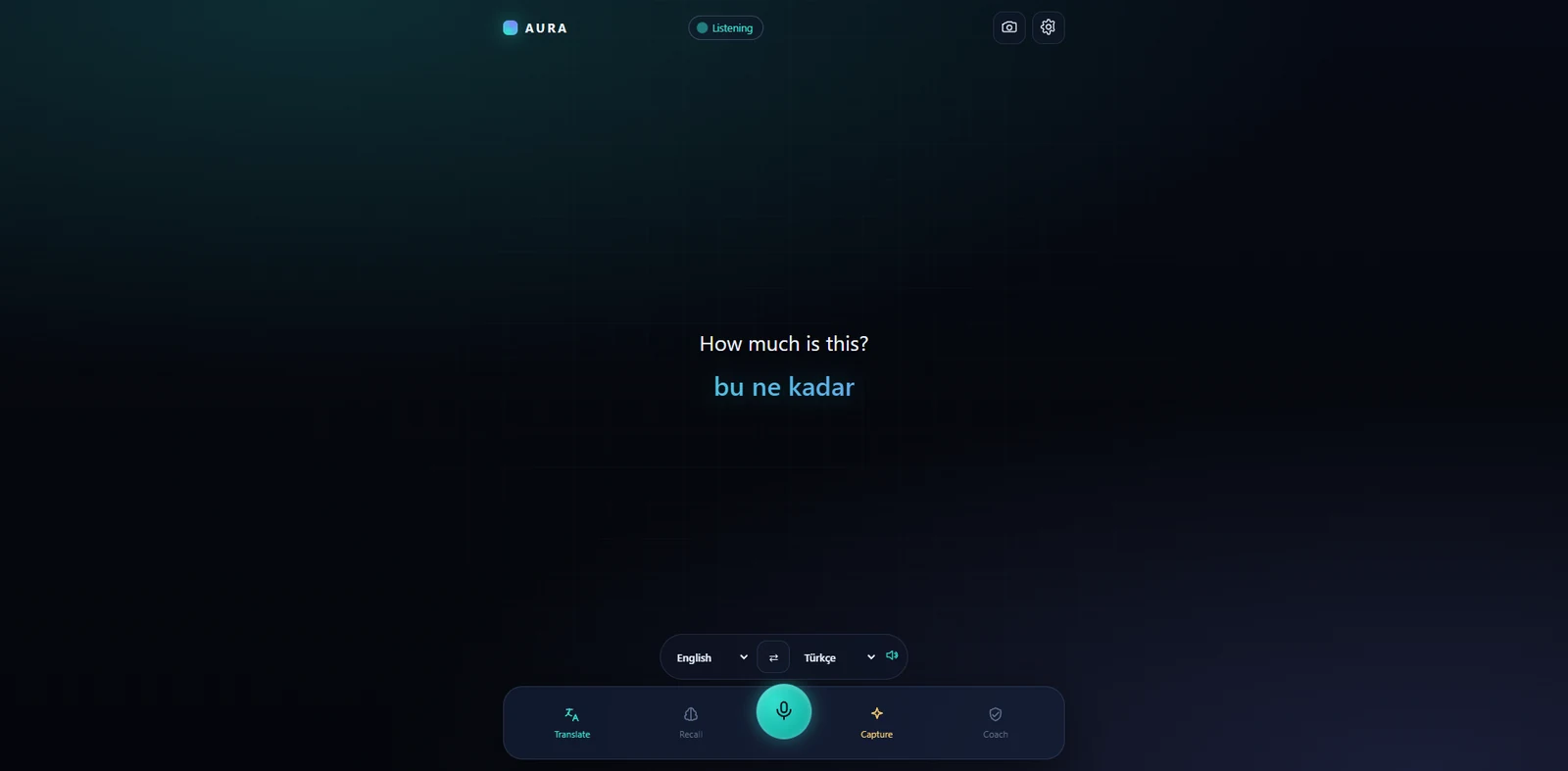
Speak, and the translation appears on your HUD and is read back aloud — in real time. Point it at a menu, a shopkeeper, a stranger asking for directions, and the wall between you drops. Fifteen-plus languages, two-way conversation, spoken playback you can toggle. This is the front door: universally loved, instantly magical, and it never feels creepy.
Total Recall
Your own photographic memory
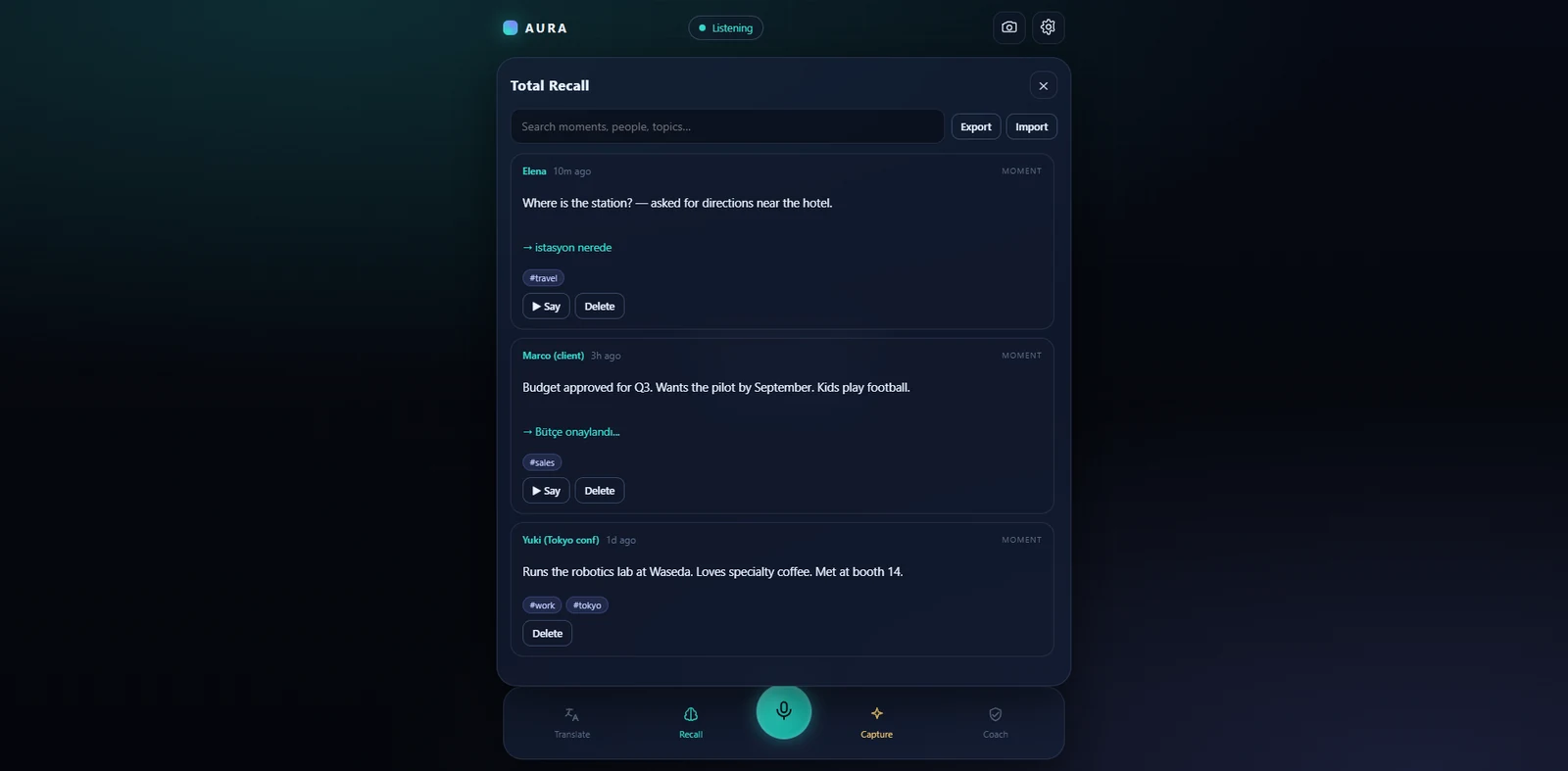
One tap saves the moment — who you met, what they said, the detail you always forget. It becomes a private, searchable timeline: find every conversation with a person, everything said about a topic, the name you blanked on. It lives on your device (IndexedDB), export or wipe it anytime. Never forget a name again.
Live Coach
A discreet edge in every conversation
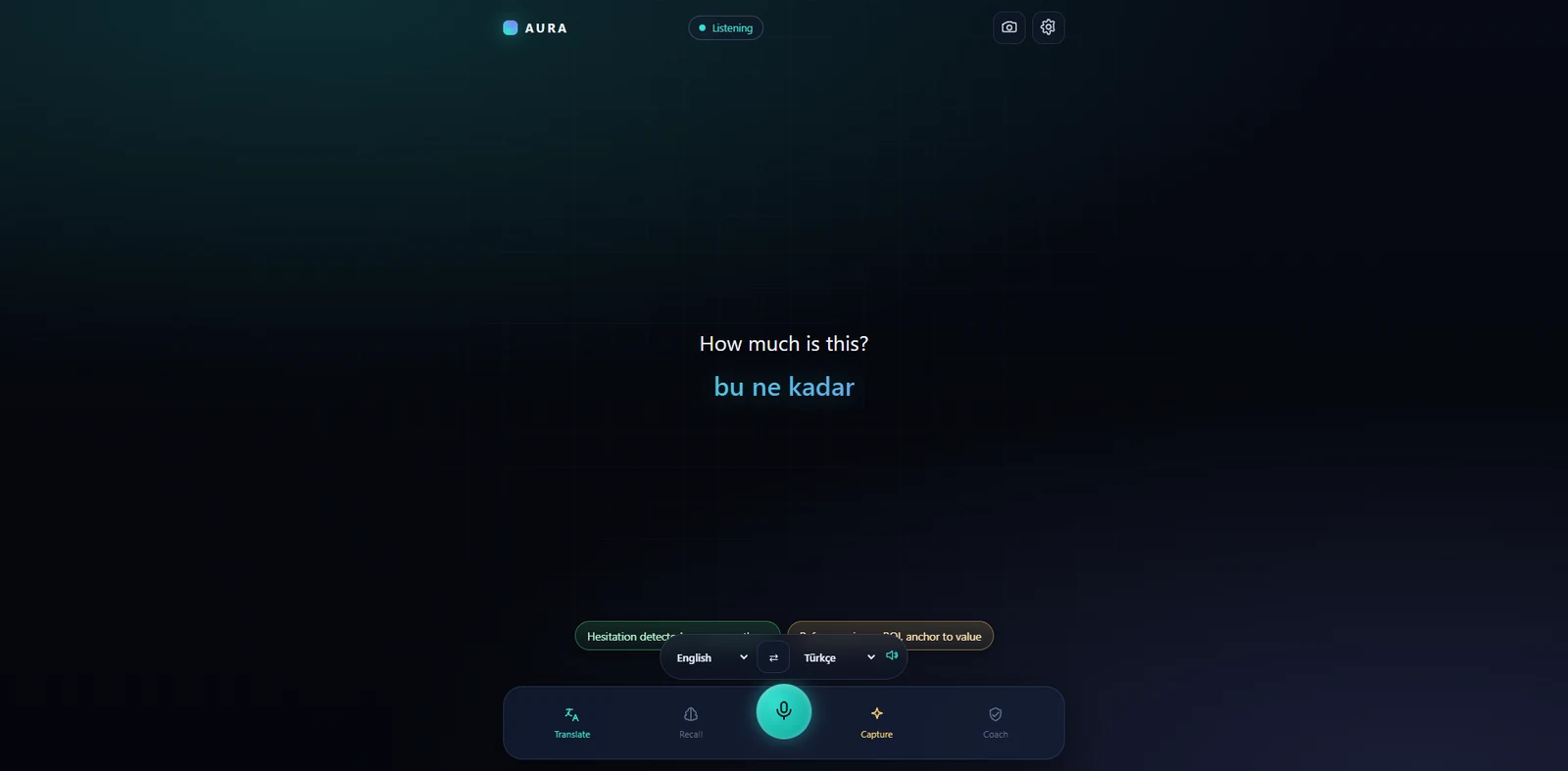
Real-time suggestion chips float over the HUD while you talk — talking points, the follow-up question to ask, a sentiment read, the reframe that lands. Pick a scenario: interview, sales, date, presentation. It works instantly with built-in heuristics and gets sharper the moment you plug in an AI key.
Instant to start, limitless when you're ready
No account, no build step. It runs the second you open it — and upgrades to full power with a key you own.
Offline demo · free, zero setup
- Built-in travel phrasebook (30 phrases × 9 languages)
- Heuristic live coach — useful with no key
- Full HUD, memory, capture, search, install
- Nothing ever leaves your device
Your own AI · bring a key
- Unlimited translation, any language
- Context-aware LLM coach
- Any OpenAI-compatible endpoint + model
- Key stored only in your browser
Built on a line it will not cross
The toxic version of this idea surveils strangers. AURA refuses that path by design — and that is what keeps it both loved and legal:
- Never identifies or profiles other people. No face recognition. Ever.
- Your memory is your life — only what you choose to save.
- Local-first. Moments stay in your browser; nothing is uploaded unless you add your own key.
- Always-visible listening state, so people around you have honest signal.
Who puts it on first
The traveler / expat
Two-way live translation in the wild — order, ask, connect without a phrasebook.
The networker
Meet 30 people at an event, forget every name — then don't. Total Recall keeps them straight.
The interviewer / seller / dater
A quiet real-time coach for the conversations that matter most.
The student / journalist
Capture lectures and interviews into a searchable, private memory.
What's inside
Zero dependencies
Pure HTML + CSS + ES modules. No build step, no npm, no framework. Open it or serve it statically — every line is readable and yours.
Two modes, instant start
Runs the second you open it in offline demo mode (built-in phrasebook + heuristic coach). Paste your own OpenAI-compatible key for unlimited, any-language power.
Installable PWA
Manifest + service worker + icons. “Add to Home Screen” for the full-screen glasses feel; the app shell works offline.
Privacy by architecture
Local-first. Moments live in your browser. Your key is stored only on your device and text goes only to the provider you choose — there is no middle server.
Camera passthrough HUD
Optional live camera behind a dark glassmorphic HUD so it already feels like looking through glasses.
Tested & documented
19 headless logic tests pass, an in-browser self-test page, a full README and an A-to-Z product spec (PLAN.md) in the box.
The stack
Vanilla and auditable — no dependencies to trust, nothing to break.
css/styles.css # design system + HUD + components
js/app.js # orchestrator: state machine, routing, mic, camera
js/providers.js # translate() + coach() — offline + BYO-key LLM
js/store.js # settings (localStorage) + moments (IndexedDB)
js/translate.js · memory.js · coach.js · speech.js · ui.js · settings.js · onboarding.js
manifest.webmanifest # PWA · sw.js # offline shell
test/ # node_smoke.mjs (19 pass) + in-browser self-test
README.md · PLAN.md # full guide + A-to-Z product spec
Where it goes next
On-device translation, wake-word, face-free “who did I talk to” via voice embeddings, calendar/contacts sync, multi-speaker diarization, and native targets for Meta / Snap Spectacles / Android XR. The HUD, module system and provider layer are already glasses-shaped — only the input and output surface changes. The roadmap ships in the box (PLAN.md).
AURA is an independent prototype and is not affiliated with, endorsed by, or built by any glasses manufacturer. It runs today as a phone/web app; “smart-glasses killer app” describes the design thesis, not a hardware product. You supply your own AI key for full translation/coaching. Offline mode is a limited demo phrasebook.
Questions
What exactly do I get for $14.99?
A ZIP with the complete app: every HTML/CSS/JS file, the PWA manifest and service worker, icons, the test suite, a thorough README and the full product spec. No obfuscation, no locked files, no license server. Read it, run it, rebrand it, extend it.
Does it run on smart glasses?
Not yet — and we say so plainly. AURA is a working phone/web prototype of the glasses killer app, with a real heads-up-display built around a camera passthrough. It runs today on any phone or laptop with a microphone. The HUD, module system and provider layer are already glasses-shaped, so the experience is designed to transfer when you target real hardware.
Do I need an API key?
No. It works instantly in offline demo mode with a built-in travel phrasebook and a heuristic coach. To unlock unlimited translation in any language and an LLM-powered coach, paste your own OpenAI-compatible key in Settings. The key stays in your browser.
Is it actually private?
Yes, by design. It never identifies or profiles other people — no face recognition, ever. Your memory is only what you choose to save, stored locally in your browser. Nothing leaves your device unless you add your own AI key, and even then only the text you speak goes to your chosen provider.
Which browser / device?
Chrome or Edge on desktop or Android give the full experience (they support live speech recognition and camera). It still runs elsewhere with a typed-input fallback. On a phone, install it to your home screen for the full-screen HUD.
Can I sell an app built on this?
You get the full source to run, learn from, rebrand and extend for your own projects. You may not resell or redistribute the source itself as a product. One purchase = one developer or company.
Why is it only $14.99?
Because the goal is for people to actually use it. It is a complete, working, tested app that would take weeks to build from scratch — priced so it is an easy yes.